
Project Overview
Criminal organisations such as mafias, large gangs and other criminal groups pose not only a significant security and economic threat but also wield substantial social and political influence. These groups have the ability to assert political control over the territories they operate in, imposing their own norms and influencing social interactions. Despite their profound impact, communities often hesitate to resist these criminal entities or collaborate with legal authorities in efforts to counter them.
To explain the ability of criminal groups to wield power, social scientists often reference codes like "omertà" (the law of silence), anti-snitching norms, or the 'Code of the street.' These codes act as barriers that deter communities from cooperating with law enforcement or reporting criminal activities. Nevertheless, the socio-psychological dynamics that underlie these codes remain unknown.
The project ‘Secret Power’ pioneers a new multimethod approach that addresses how ideologies, values and identities may foster criminal groups' capacity to wield power in society. The project aims to transform the scientific understanding of criminal governance, providing strong quantitative evidence that can substantiate policy recommendations and educational interventions.
The project has been awarded a European Research Council – Starting Grant (ERC-StG). The overall funding is €1,499,818.00 (funded by UKRI).
Geographical Context
Criminal groups exert their impact on communities worldwide, and this project will embark on its initial investigation in three distinct countries: Italy, Japan, and the UK. Each of these nations presents instances of criminal governance in unique ways. For instance, Italy is home to 'traditional' mafia-type groups, renowned for their capacity to exert quasi-political influence. Meanwhile, Japan houses the Yakuza, an equally substantial, well-structured, and hierarchically organized criminal organization deeply entrenched within the community. In the UK, a larger number of smaller criminal groups, including crime firms and gangs, possess less influence over institutional bodies but grapple with the challenge of asserting control over specific territories.
Furthermore, all three of these countries are characterized by a notably robust presence of the state. Consequently, this project aims to explore how individuals respond to illegal political power within contexts marked by the coexistence of conflicting legal and illegal institutions, both competing to secure cooperation and garner consensus.
The project's global scope will enable us to evaluate cultural differences and similarities in how people assess the power of criminal groups.
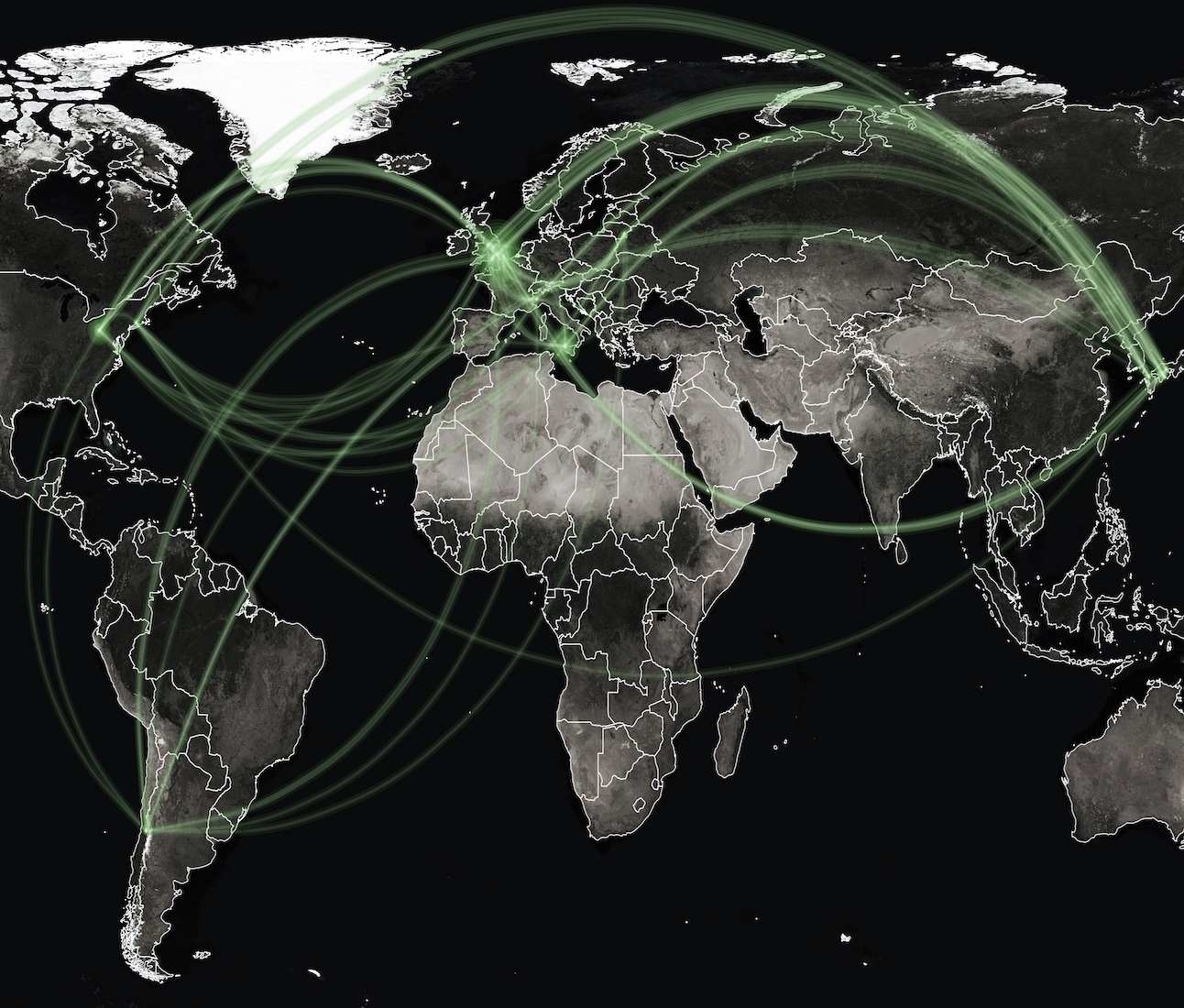
In addition to the three main countries of Italy, Japan, and the UK, we also collect data in Germany, Chile, Colombia, South Korea and other regions. Our network is represented in the map below.
Secret Power
Project Network
Organisation of the Project
The project is organized in three Work Packages, each with its own milestones and goals.
Preparatory Work Package: Instruments and Foundations
Measuring the Perceptions of Criminal Governance
Our first objective is to develop a measure of individuals' perceptions of criminal governance that can be applied across various countries, contexts, and types of criminal groups. This measurement tool will empower us to conduct meaningful cross-country comparisons, shedding light on how individuals from diverse nations perceive the political influence of criminal groups and the circumstances under which they are more inclined to accept it.
Learn more ↗
Work Package 1: Society and Organised Crime
Population Surveys
This phase of the project is dedicated to data collection through comprehensive population surveys across multiple countries. It will specifically target a cross-section of geographical subunits in Italy, the UK and Japan, allowing us to analyze the complex interplay between individual-level, area-level, and structural-level factors in how individuals perceive criminal groups' political power. Additionally, within this work package, we will conduct experimental studies to investigate the factors that contribute to the preservation of the legitimacy of criminal governance across different countries.
Learn more ↗
Work Package 2: Socialising Legality
The Perceptions of Criminal Governance in Adolescence
This phase of the project centers on adolescence, a pivotal stage in the development of attitudes toward authorities. Longitudinal studies will be carried out in communities marked by a significant presence of criminal groups. These studies will examine within-person processes, addressing the legitimization of both legal and criminal forms of governance. By focusing on this critical age group and conducting research in high-crime areas, we aim to gain valuable insights into the factors that influence young people's perceptions of authority, both legal and illicit.
Learn more ↗